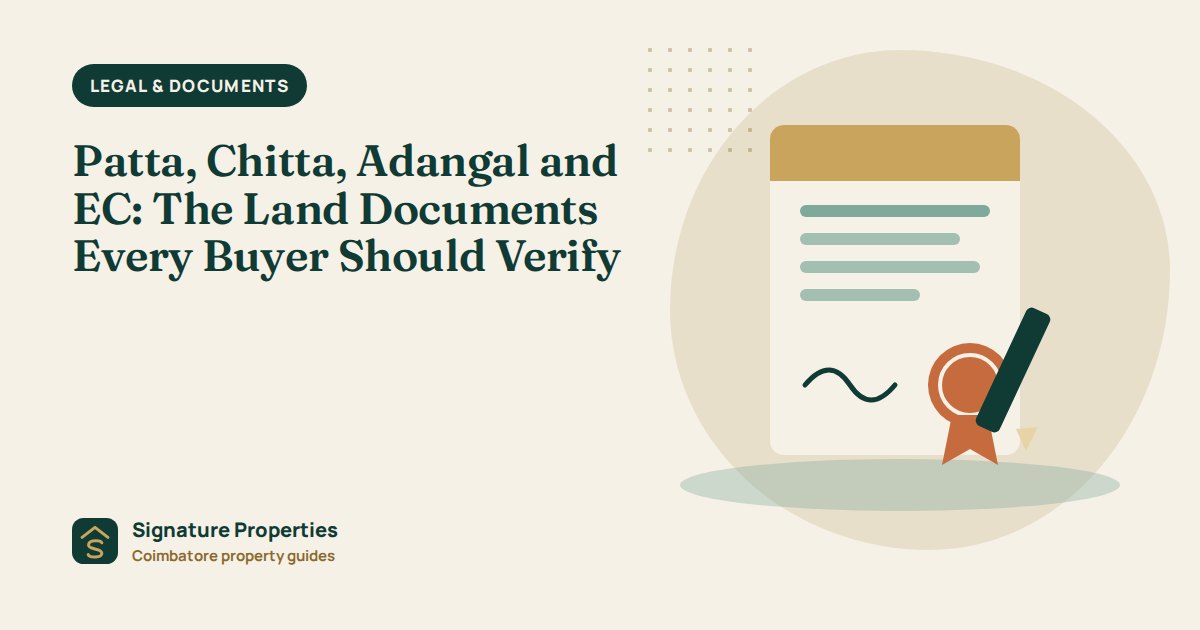
When you buy land or a plot, especially in Tamil Nadu, you will be asked about patta, chitta, adangal and EC. These documents together tell you who owns the land, how it is classified and whether anything is pending against it.
Patta
Patta is a revenue record issued by the state that shows the owner of a piece of land, along with the survey number and extent. Before you buy, the patta should be in the seller’s name. After registration, you apply to transfer it to your name.
Chitta
Chitta records details of the land such as its extent, classification and ownership as maintained by the village administration. In many places it is now available together with the patta online.
Adangal
Adangal (also called the A-register extract in some areas) records how the land is used, for example wet land, dry land or its cultivation details. It is useful when buying farm or agricultural land.
Encumbrance Certificate (EC)
The EC comes from the sub-registrar’s office and lists registered transactions on the property over a chosen period, such as sales, mortgages and gift deeds. A clean EC shows no loans or legal charges pending. Ask for an EC covering at least the last 13 to 30 years.
How to verify them
- Use the state’s online land records and registration portals to check patta and EC details.
- Match the survey number, extent and owner name across every document.
- Compare the EC with the parent documents to confirm the chain of ownership.
- Have a property lawyer review everything before you pay a large advance.
Why it matters
Most land disputes come from gaps between these records: a patta in someone else’s name, a mortgage showing on the EC or a survey number that does not match the layout. Checking them early saves years of trouble later.
We review these documents for every listing on Signature Properties. Ask us for the documents on any property.